Clock Generation -
This section will discuss clock generation tips and SYN101 limitations.
Define the Input Clock
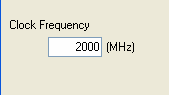
Entering the correct input clock frequency is important to ensure accurate frequency generation at the output.
The frequency in Hz parameter is calculated from the input clock frequency value.
Notice that the same frequency word in hex can represent various frequencies in Hz when
the clock frequency is altered. The maximum input clock is 2000 MHz. It
is also the default input clock frequency. The SYN modules optionally include an on-board 2 GHz clock source to provide this input clock.
*If the frequency generated is not what is expected, check that the input clock frequency box is correct.
Defining the Waveform Parameters
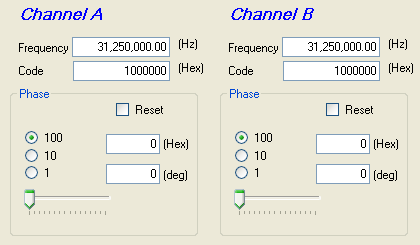
Each channel's waveform output is characterized by its frequency and relative phase.
Set the parameters to generate the desired waveform.
The SYN101 module maximum output frequency is the Nyquist frequency, or 1 GHz with an input clock of 2 GHz.
Defining the Frequency
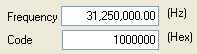
Input the desired frequency in Hz. The waveform will immediately update upon pressing the return button. The frequency resolution is constrained by the Direct Digital Synthesizer. The lowest frequency output at 2 GHz is about 1.86 Hz
An alternate way to define the frequency is to enter the frequency code in Hex. The hexadecimal codes will correspond to different outputs at different input clocks, so you may find it more convenient to define the frequency in Hz.
Defining the Relative Phase
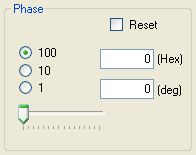
Input the desired relative phase in degrees or hexadecimal code in the corresponding text box. The relative phase can also be increased or decreased using the horizontal scroll bar. The radio buttons set the order of magnitude for relative phase tuning.
Generating the Waveform
When the input clock frequency, the frequency, and the relative phase are updated, the SYN101 will generate the new waveform. The GUI is highly responsive and the updated values can be noticed through an immediate change in output.
With the SYN101 GUI, the user is able to dynamically define and generate two simultaneous output waveforms.